AFTER YOU SCROLL
The Economics Behind Food Waste
The problem of food waste extends beyond environmental concerns, as it’s also
associated with economic implications that people often overlook. This crisis affects
both high- and low-income countries, with only a seven-kilogram difference in food
waste per capita per year between income groups. According to the UN environment
agency, approximately one-third of food goes to waste globally of which 13% is lost in
the supply chain (the stage before reaching the consumer such as during the harvest,
manufacturing, transporting, or storage process) and an additional 19% of waste is after
reaching the consumer at the retail, food service, and household level. This represents
approximately $940bn in economic loss annually. For instance, in the United States,
food waste accounted for $218bn lost, equivalent to 1.3% of its GDP. This highlights the
key economic problem of scarce resources becoming wasted with roughly US$1 trillion
in total cost that places a burden on the economy. Beyond the cost of the waste itself,
the additional cost and time associated with transporting and disposing of the waste that
businesses and governments have to bear contribute to the inefficient use of resources
that can be used elsewhere to produce more output or to achieve other macro
objectives.

How does food go wasted?
One of the reasons is because of information gaps and uncertainty about future
demand.
It’s difficult for restaurants or food-service companies to forecast and assume the
perfect amount of stock they will need to match the demand of the customers.
Numerous stores buy in bulk to minimize the cost, but this often leads to an
excess of unsold products when demand is lower than expected. Although past
data may help to predict future demand, consumer behaviour can be influenced
by trends, seasons, or changes in income so it can be difficult for businesses to
obtain all the necessary data to determine the right level of supply.
Another reason, consumer incentives
Consumer food waste is the main contributor to food surplus contributing around
45.9% or 32.1million tons according to ReFED/2024 data. This can be caused by
various factors such as over-purchasing as a result of promotions, overestimating
the amount of food a household should cook, or misunderstanding date labels.
From the economic perspective, resources are being misallocated as the
ingredients or effort used to produce the product become wasted due to
imperfect decision-making. The problem can be magnified when there are limited
food recycling and donation programmes or when individuals have little incentive
to change their behaviour or take action to reduce food waste, most of the
leftovers are more likely to go to waste.
Economics ImpactFinancial cost for business
Food waste can cause a financial burden for the business. This is because the cost that
is put into harvesting, manufacturing, transporting, and disposing of the waste at the
landfill of the unsold product is still accounted for in the cost that producers have to pay.
This results in lower profitability for businesses which can cause wider economic
problems such as lower investment in new capital or machinery for the business;
businesses may lay off labour to reduce costs or they may even pass on the cost to
consumers in the form of a price increase which then leads to upward pressure on food
prices. The problem is severe for low-income households and the food insecure.
Financial cost for the government
Moving on to the government side, food waste creates a drastic burden on government
expenditure as it creates opportunity costs for the government as money is relocated to
manage the waste by collecting, transporting, and disposing of it instead of using it
elsewhere to improve public services such as healthcare or education. Moreover, food
waste contributes around 10% of global greenhouse gas emissions. This ongoing
environmental problem requires the government to intervene. Resources will need to be
allocated to monitoring and administering producers to control the level of pollution.
Allocative inefficiency
Resources such as land that are used to grow crops, labour effort, and electricity that
create cooked meals are wasted on producing food that will never be eaten. Opportunity
cost is created as these resources can be better utilised elsewhere to create goods or
services that generate greater economic value and match society's wants. Therefore,
food waste represents allocative inefficiency and misallocation of scarce resources.
What can you do?
Since food waste is something individuals encounter every day, making a difference
does not have to involve taking on complicated tasks. The approach individuals could
take can be as straightforward as planning what to buy before going to the supermarket,
making a list of things you already have to prevent overpurchasing, checking the
expiration date to prioritise what to consume first, and cooking in manageable portions
to avoid leftovers. While individuals can take on the simple yet effective preventative
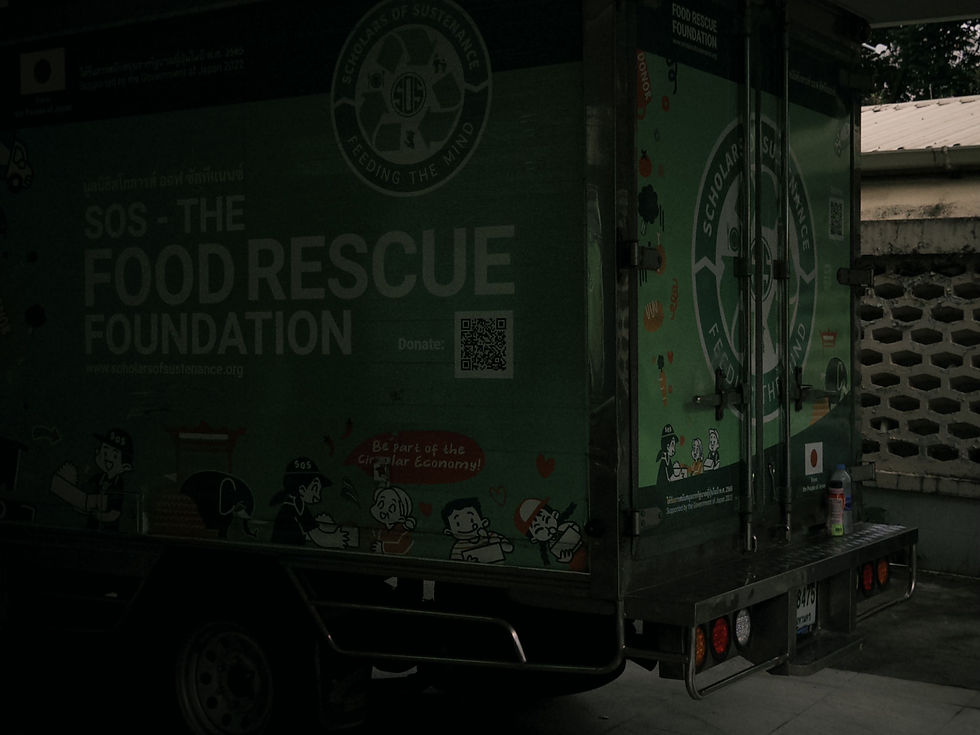
measures, organizations such as SOS(Scholars of Sustenance) can also act as an
assistant in rescuing food surplus that individuals wish to donate. Their role is to rescue
and redirect the food surplus from numerous restaurants, hotels, and households to
communities in need. Therefore, resources we already acquire can be allocated to be
used to the best of their value